
LookFar Labs2 September 2026
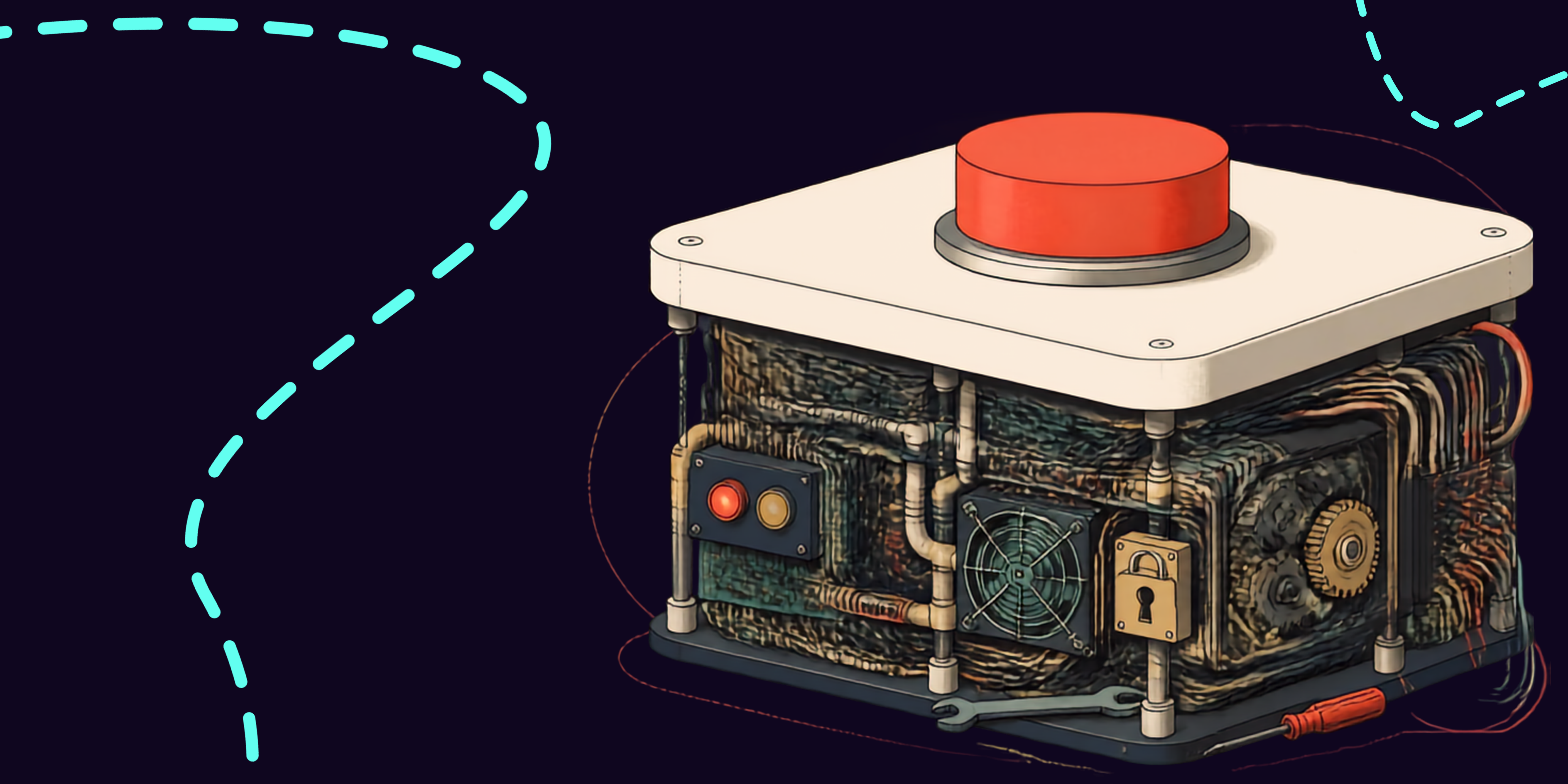
AI Made Custom Software Easier to Start. It Didn’t Make It Easier to Own.
AI has changed who can start building software.
A founder can describe an app idea and get a working prototype. A department lead can generate an internal dashboard. An operations manager can create a workflow tool without waiting for a traditional development cycle. For businesses that have been held back by software costs, timelines, or technical bottlenecks, that is a meaningful shift.
It is also where the risk begins.
AI can help a team create software faster. It does not automatically make that software secure, scalable, maintainable, or ready to touch real customer data.
That distinction matters for SMB and mid-market companies because AI-assisted development is moving from experimentation into business operations. EY’s 2026 AI Pulse survey found that 76% of senior leaders investing in AI say off-the-shelf software no longer meets their organization’s specific needs, and 87% say they have deployed or are piloting programs to develop in-house, AI-built software for internal use. Reuters has also reported that “vibe coding” may pressure traditional software vendors by making narrow internal tools easier to build, while noting that security, scalability, and enterprise complexity remain major barriers.
The takeaway is simple:
AI made custom software easier to start. It did not make custom software easier to own.
What should businesses remember about AI-generated custom software?
Quick answer: AI can help founders, SMBs, and mid-market teams build software prototypes faster, but AI-generated apps still need technical review before they support real users, sensitive data, or business-critical workflows. The main risks are weak security, fragile architecture, unclear ownership, poor testing, and software that works in a demo but fails in production.
What is the difference between starting software and owning software?
Starting software means getting something to work.
Owning software means being responsible for what happens after it works.
That includes security, architecture, testing, documentation, integrations, permissions, support, monitoring, data handling, and future changes. It also includes knowing whether the software actually solves the right business problem.
This is where AI-generated software can create a false sense of confidence. A prototype may look polished in a demo but still have weak authentication, exposed data, fragile logic, unclear dependencies, or no real plan for maintenance. The interface may look finished before the underlying system is trustworthy.
For a founder, that can mean walking into investor or customer conversations with an app that appears more mature than it really is. For an SMB, it can mean a team quietly starts relying on a tool before anyone has reviewed how it stores data, who can access it, or what happens when it fails
Why is vibe-coded software risky for businesses?
Vibe coding is risky when the person creating the software does not know enough about software to evaluate what the AI produced.
That does not mean non-technical people should never use AI tools. It means they need to understand the limits of what a working prototype proves.
A non-technical founder may be able to get an app running, but not know whether the database is structured correctly, whether user roles are enforced, whether API keys are exposed, whether sensitive data is encrypted, or whether the app will break when usage grows. An internal team may be able to create a useful workflow automation, but not know whether it creates compliance issues or sends confidential information to the wrong place.
Security researchers are already seeing this pattern. WIRED reported in May that thousands of apps built with AI coding tools had exposed corporate or personal data on the open web, including apps built with platforms such as Lovable, Base44, Replit, and Netlify. Axios covered the same research and described the broader issue as AI vibe-coding apps leaking sensitive data.
This is not a theoretical concern. According to reporting summarized by OX Security, Escape.tech scanned 5,600 applications built with vibe coding tools and found more than 2,000 vulnerabilities, more than 400 exposed secrets such as API keys or credentials, and 175 instances of exposed personally identifiable information.
The issue is not that AI-generated code is always bad. The issue is that software can now be generated faster than many teams can review it.
What can go wrong when software reaches real users?
The biggest problems usually appear when a tool moves from private testing into real-world use.
That is the moment when software starts handling real data, real users, real exceptions, and real business consequences. A weak prototype becomes risky when it collects customer information, connects to a payment system, stores internal files, automates a decision, or becomes part of a daily workflow.
The Tea app breach is a useful cautionary example, even though it should not be described as a confirmed vibe-coding incident. Tea, a women-only dating safety app, suffered breaches that exposed tens of thousands of user images, including selfies and photo IDs, and later exposed private messages. Reuters reported that Tea suspended direct messaging after the breaches. WIRED later reported that the initial leak exposed 72,000 images, including 13,000 selfies and photos of IDs, and that a second breach exposed messages affecting 1.1 million users.
The lesson for SMBs is not “Tea was vibe-coded.” The lesson is more basic and more relevant: when software handles sensitive data, security decisions become business decisions. A feature that looks simple to users may depend on storage, access control, authentication, deletion policies, logging, and incident response. If those decisions are wrong, the damage is not limited to the codebase.
It becomes a trust problem.
When should AI-generated software get reviewed professionally?
AI-generated software should be reviewed before it becomes operational, especially if it will touch customer data, employee data, financial information, proprietary business information, healthcare information, legal information, or core systems.
A professional review is not always a rebuild. In many cases, the first step is simply to understand what exists. Is the foundation sound? Are there obvious security concerns? Is the architecture maintainable? Are there hidden dependencies? What would need to be fixed before launch? What can wait?
For founders, this review can help determine whether an AI-built prototype is investor-demo material, MVP material, or something that needs to be rebuilt before customers use it.
For SMBs, it can help determine whether an internal tool is safe to rely on, whether it should be integrated into other systems, and who should own it going forward.
What should business leaders ask before relying on AI-built software?
Business leaders do not need to become engineers, but they should ask ownership questions before putting AI-built software into regular use.
The most important questions are:
- What data does this software access, store, or change?
If the answer includes customer, employee, financial, health, legal, or proprietary data, the tool needs stronger review.
- Who can access what?
User roles, permissions, and authentication are not details. They determine whether sensitive information is protected.
- Where are credentials and API keys stored?
Exposed secrets are one of the most common and dangerous problems in quickly built software.
- What happens when something goes wrong?
Every operational tool needs failure paths, human escalation, and a way to correct bad data or bad outputs.
- Who can maintain this after the original builder moves on?
If no one understands the code, the business does not fully own the software.
- How will we know whether it is creating value?
A working app is not the same as a useful business system.
These questions help separate a promising prototype from a risky operational dependency.
Should companies stop using AI to build software?
No. AI-assisted development can be useful, especially for prototyping, internal experimentation, and accelerating well-scoped engineering work.
But businesses should be clear about what AI is good at and where human judgment still matters.
AI can help create a first version. It can help explore an idea. It can speed up repetitive coding tasks. It can help a technical team move faster.
It should not be treated as a substitute for architecture, security review, testing, product judgment, or long-term ownership.
The companies that get the most value from AI-built software will not be the ones that ship the fastest. They will be the ones that know when speed is useful and when discipline is necessary.
Written by
 Signal-Based Selling FTW with Creative Service Agencies
 AI Made Custom Software Easier to Start. It Didn’t Make It Easier to Own.


 Developed with support from Louisiana Economic Development’s Office of Entertainment Industry Development
Copyright © 2026 LookFar Labs. All rights reserved. Privacy Policy